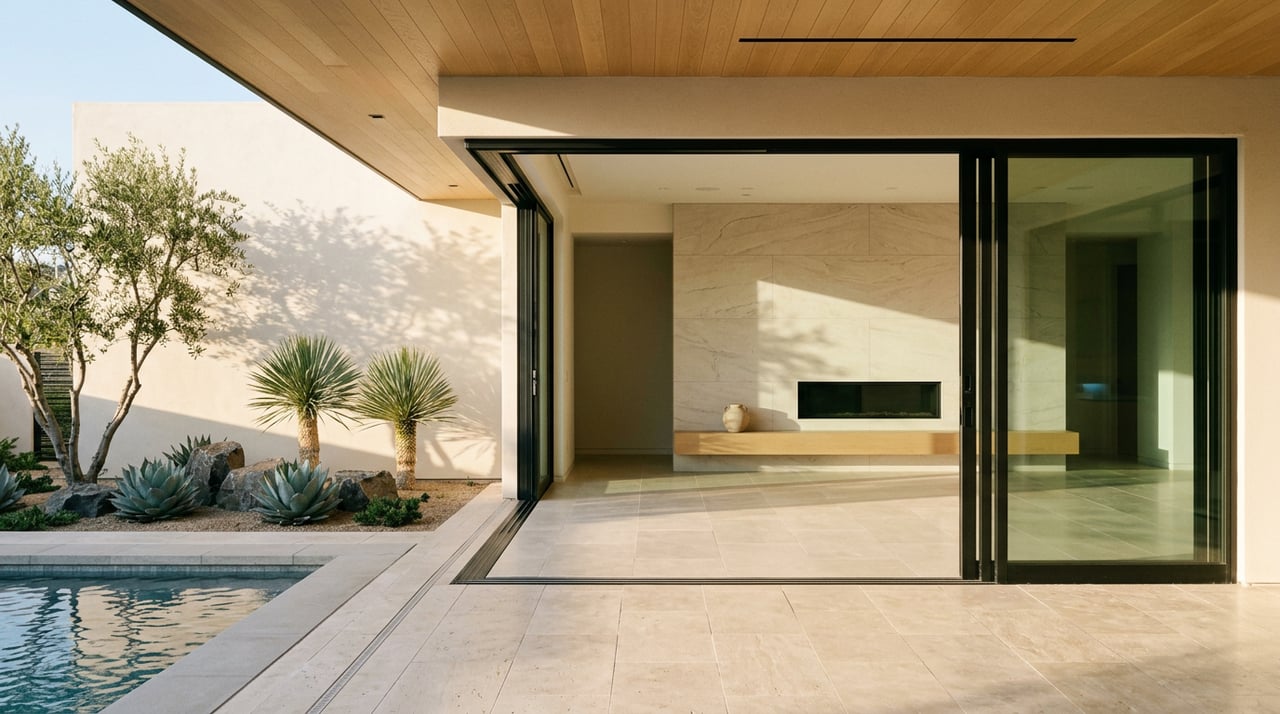
Your Guide to Building a Custom Home in Mission Hills
March 5, 2026
March 5, 2026
Dreaming about creating a legacy estate in Mission Hills but unsure where to start? You are not alone. From choosing the right lot to navigating permits, budgets, and timelines, the process can feel complex. This guide gives you a clear, local roadmap so you can plan with confidence and avoid costly surprises. Let’s dive in.
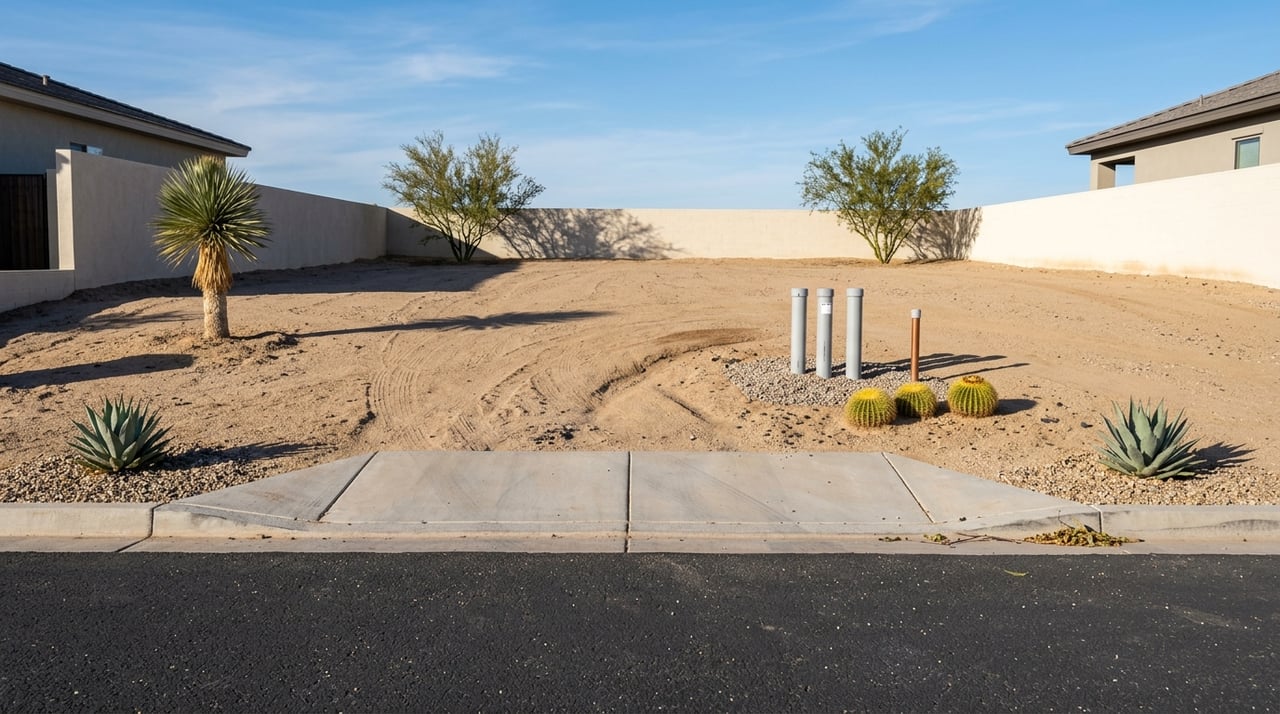
Mission Hills sits on Henderson’s southeastern edge and offers a mix of master-planned neighborhoods and larger rural-zoned parcels near the city fringe. You can find smaller infill lots with established utilities alongside acreage suited for expansive estates, RV garages, and guest casitas. Active listings in the Mission Hills and nearby Paradise Hills area show parcels around 0.9 to 2 or more acres priced from the mid hundreds of thousands to multimillion-dollar levels depending on size, location, and views. For live examples that update with the market, review current land listings in Henderson’s Mission Hills area on a trusted aggregator like this homes.com search.
What this means for you: subdivided lots often come with easier permitting and utility connections but tighter design rules. Larger rural parcels allow more freedom, yet they may require added site work, utility extensions, and longer timelines. Your choice should match your lifestyle goals and risk tolerance.
Before you write an offer, confirm the basics that drive time and cost. These checks protect your budget and schedule.
Start with the City of Henderson’s Development Services Center (DSC). Verify the parcel’s zoning classification, permitted uses, setbacks, height limits, and any hillside or wildland-interface overlays. The DSC is your authoritative source for zoning, submittal checklists, and entitlement pathways. Use the City’s Planning Services and DSC page to review requirements and contact the right staff.
Order a preliminary title report and check all recorded easements, including utilities, drainage, and access. Verify that any paper streets or right-of-way questions are resolved. Confirm legal ingress and egress and understand any shared driveway or maintenance agreements.
Commission an up-to-date ALTA/NSPS survey to verify boundary corners and detect encroachments. A current topographic map helps your design team plan grading, drainage, and retaining walls. If the seller provides an older survey or soils report, still obtain independent verification.
Geotechnical conditions can shift budgets. On hillside or large-acre parcels, expect to investigate expansive soils, rock, and slope stability. Retaining walls, over-excavation, and engineered foundations can add cost and time, so get a soils report early.
Confirm whether electric, gas, water, and sewer are at the lot line. If utilities require main extensions or trenching across public right-of-way, plan for added coordination, fees, and time. Coordinate with local utilities and the City’s development reviewers to scope connection costs.
Some sites will require a hydrology or stormwater report and detention design as part of the civil submittal. Civil engineering scope can be a separate schedule driver, so plan early if your lot has complex drainage patterns.
If your lot is within a common-interest community, your design must pass Architectural Review Committee approval. Nevada’s framework for HOAs and ARC procedures is governed by NRS Chapter 116. Request design guidelines, submittal requirements, and fee schedules up front.
Verify fire hydrant distances, driveway widths, and any on-site water supply or sprinkler requirements that apply to your lot type and location. Early coordination can prevent redesigns later.
Henderson adopts current building codes with local amendments, and editions update over time. Always confirm which code set applies to your project on the City’s Building and Fire Safety codes page. Plan for agency clearances too. Many projects require letters or approvals from utilities, Fire, and Public Works before a building permit can be issued.
All planning, civil, and building plan reviews flow through the Development Services Center. You can track submittal checklists and permit status there. When schedule is critical, Henderson offers an Expedited Plan Review program. Treat it as an option, not a guarantee, since eligibility, fees, and review capacity apply.
For budget planning, use the City’s Permit Fee Estimator. It is a planning tool, and final fees are calculated at submission, but it helps you include permit and impact fees in your early pro forma.
A custom estate succeeds or struggles based on team quality and coordination. Plan to assemble:
In a traditional path, you hire an architect to design, then send plans to several builders to bid. In a design-build model, one integrated team designs and builds under a single contract. According to the Design-Build Institute of America, design-build can provide single-point responsibility, earlier cost feedback, and faster delivery because design and construction coordinate in real time. The tradeoff is less competitive price bidding at the earliest stages. For complex estates with intensive site work or custom systems, many owners favor the schedule and coordination advantages of design-build.
Use conservative planning horizons so you are not surprised by review cycles or lead times:
Build buffers into each phase. Lock long-lead items early and schedule inspections and third-party tests in advance when possible.
Construction cost per square foot varies widely by design complexity, finish level, and site work. Regional context for Nevada and the Las Vegas area indicates custom and luxury estates commonly exceed the low production-home ranges, with many projects falling in the 200 to 400 dollars per square foot or higher category for luxury execution and complex sites. Treat this as directional guidance only. Always obtain local builder estimates for your exact program and lot. For regional context and planning, review this Nevada-focused overview by a builder group (REC N Group).
Plan soft costs for architecture and engineering, civil and geotechnical studies, permits and impact fees, testing, landscaping, pool, and lender fees. Add a 10 to 20 percent contingency on top of hard construction costs for custom projects to cover design refinements, material swings, and site discoveries.
Construction financing typically comes in two forms:
These products have unique disclosure, draw, and escrow requirements. Engage a lender who regularly closes construction loans and can explain TRID and Loan Estimate specifics. For a plain-language introduction to construction-to-permanent structures, see this explainer on single-close construction-to-permanent loans. Speak with a lender early and seek pre-approval that includes land plus construction.
Follow this sequence to reduce risk and maintain momentum:
For fee planning along the way, use the City’s Permit Fee Estimator. Remember it is a planning tool; final fees are calculated at submission.
If you want a single source of accountability from lot to move-in, you can benefit from a hybrid approach. Cynthia Lauren Huff combines high-touch brokerage with owner-operated homebuilding through Dream Construction Co., giving you one integrated path to source land, structure entitlements, design, build, and present your finished estate. The result is clarity on budget and timeline, local know-how with Henderson’s DSC and Fire, and a team that treats your project with family-level stewardship.
Whether you seek a rural-zoned, no-HOA acreage play or a bespoke compound with a guest casita and RV storage, Cynthia’s vertical model is built for Mission Hills. Ready to explore lots, numbers, and a delivery plan tailored to you? Connect with Cynthia Lauren Huff to Schedule a private consultation & tour.
Stay up to date on the latest real estate trends.
Get assistance in determining the current property value, crafting a competitive offer, writing and negotiating a contract, and much more. Contact me today.